



Notarising an Affidavit in Australia
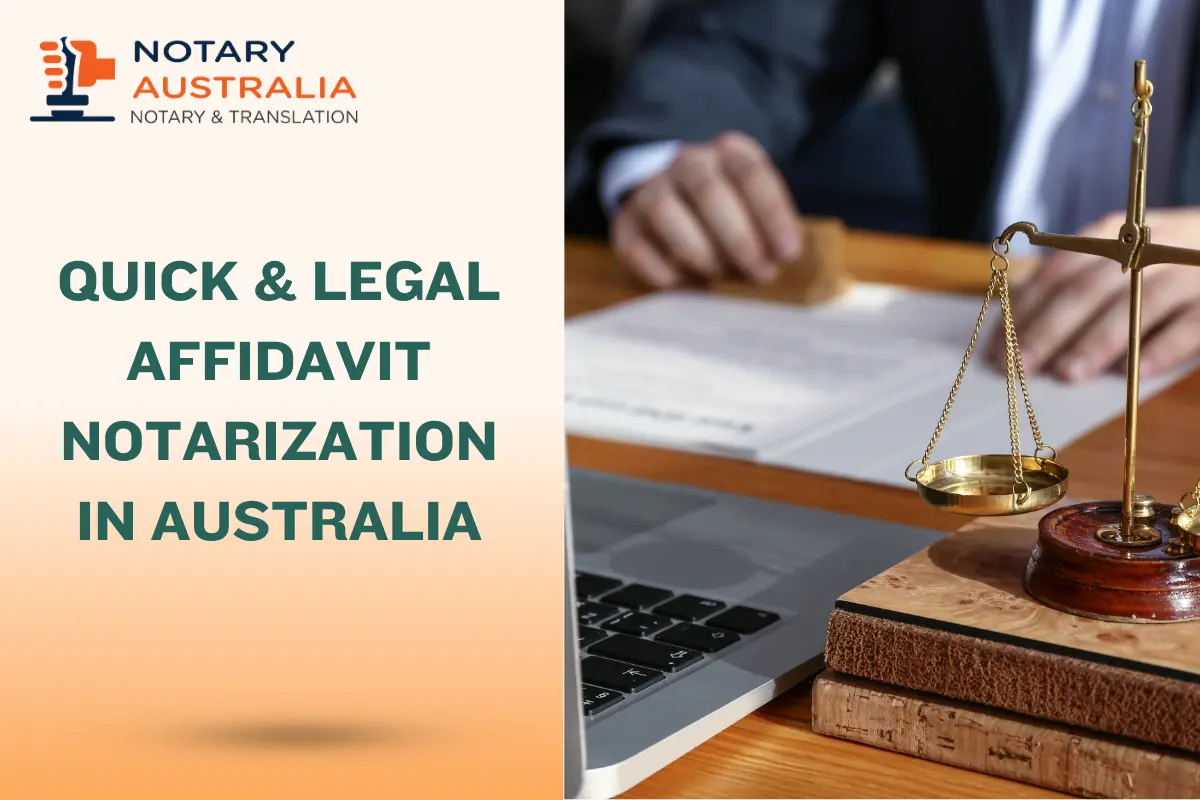
Table of contents
An affidavit is a written statement of facts that you swear or affirm is true, for use as evidence in legal proceedings. When a notary is involved, they are not copying anything. They are administering an oath. That changes almost every practical detail: who must attend, what you must not do beforehand, and what invalidates the result.
If you have been asked to swear an affidavit in Australia for use in a foreign court, an overseas estate matter or an international arbitration, this is what the process looks like, and how to tell whether you need a notary at all.
Do affidavits need to be notarised?
Not always. It depends on where the affidavit will be used.
For use in Australia, an affidavit is usually sworn before one of the people the relevant court or law allows to take affidavits. That commonly includes Justices of the Peace and lawyers, and a notary is one option among several rather than a requirement. Who qualifies differs between states, territories and courts, so check the rules of the court or body that will receive it.
For use overseas, an affidavit almost always needs to be sworn before a notary. A foreign court needs a signature and seal it can verify, and in practice that means a notary whose signature the Department of Foreign Affairs and Trade (DFAT) can then authenticate. A JP's attestation cannot be apostilled.
So an "affidavit without a notary" is normal for domestic use, and rarely works for overseas use.
An affidavit is sworn, not certified
A certified copy says "this copy matches the original I saw". An affidavit says "I swear that what I have written here is true", and the notary's role is to administer the oath or affirmation and witness you signing.
The notary attests that you appeared before them, that they were satisfied of your identity, that you swore or affirmed, and that you signed in their presence. They are not attesting that anything in the affidavit is true. That is why a notary will not comment on your content but will be exacting about the mechanics.
You choose between an oath, which is religious, and an affirmation, which is not. They have the same legal effect. Say which you want.
Do not sign it before you arrive
This is the most common reason an affidavit has to be redone.
Bring it unsigned. You sign in front of the notary, after being sworn. If you have already signed, the notary cannot honestly certify that you signed in their presence, and will either have you sign a fresh copy or decline. Leave the date blank too; the notary dates it on the day.
Affidavit or statutory declaration?
These are not interchangeable, and people are routinely sent for the wrong one.
- A statutory declaration is a formal written statement declared to be true. In Australia it is used administratively, for government departments, insurers and employers, and the witness is drawn from a prescribed list.
- An affidavit is evidence, made on oath or affirmation, for use in legal proceedings. It typically follows a form set by the court that will receive it.
If the request came from a court, a foreign lawyer or a tribunal, it is almost certainly an affidavit. If it came from an agency, an insurer or an employer, it may well be a statutory declaration, which is usually simpler to arrange. Ask before you book.
Both are serious. Knowingly making a false statement in either can be a criminal offence, which is the practical answer to whether declarations are legally binding.
Can you get an affidavit online?
Two different things hide behind that search.
Getting the affidavit written. An affidavit is your evidence, in the form the receiving court requires. It should come from the lawyer or authority who asked for it, or be drafted by a lawyer acting for you. A notary is not your drafter, and a generic affidavit downloaded from a website is unlikely to follow a foreign court's form.
Getting it sworn remotely. Some Australian jurisdictions allow some documents to be witnessed by video, and the rules have changed repeatedly since 2020. More importantly, the receiving court's rules decide whether it will accept a remotely sworn affidavit. Confirm in writing with the lawyer who asked for it before booking a remote appointment.
The wording is set by the receiving court, not by the notary
An affidavit sworn in Australia for an Indian, Emirati, English or US proceeding usually has to follow that jurisdiction's form: the heading, paragraph numbering, the jurat wording at the end, whether pages must be initialled, and how exhibits are identified.
So the order of operations is:
- Get the draft from the lawyer or authority who asked for it, in their required form.
- Read it and satisfy yourself that every statement in it is true. You are swearing to it.
- Only then book the notary.
A notary will help with execution and can flag an obviously defective jurat. Asking them to write the substance of your evidence puts them in a position they should refuse.
Exhibits
Most affidavits attach documents: contracts, emails, certificates, photographs. These are exhibits, with their own formalities.
Each exhibit is normally identified by a certificate or exhibit note signed by the notary, referring to the paragraph that mentions it and marked with a letter or number. Bring the exhibits in the order they appear, already labelled, and bring the number of sets the receiving court wants. If the court wants an exhibit supplied as a certified copy, say so when booking; that is a separate notarial act.
At the appointment
- Identification. Photo identification, ideally a current passport, because the name on it should match the name in the affidavit exactly. A middle name present in one and absent from the other causes real problems overseas.
- The notary reads the jurat and asks whether you wish to swear or affirm.
- You are sworn, then sign each page where required, in front of the notary.
- The notary signs and seals the jurat and each exhibit note.
- The act is recorded in the notary's register.
If you cannot read the affidavit, or cannot read English, an interpreter will be needed and the jurat will record that. Arrange this in advance. An affidavit sworn by someone who did not understand it is worth nothing.
Apostille and legalisation
For a foreign court to accept the affidavit, the notary's signature and seal usually have to be authenticated. If the destination is a member of the Hague Apostille Convention, DFAT issues an apostille. If it is not, the affidavit goes to DFAT for authentication and then to that country's embassy or consulate in Australia for legalisation. Check membership against the HCCH status table on the day. No notary can issue an apostille; only DFAT can.
Build this into your timetable. Court filing deadlines do not move because authentication took longer than expected.
Common questions
How much does it cost to get an affidavit notarised? Notaries set their own fees. Expect a charge for the oath and jurat, with exhibits and additional deponents usually charged on top. Because affidavits vary so much, ask for a quote against the actual draft. DFAT charges separately for an apostille.
Can a Justice of the Peace witness my affidavit instead? For an Australian proceeding, often yes, if the court's rules allow it. For a foreign court, no.
Do I need to bring a witness? Usually not; the notary takes the oath. Check whether the foreign form asks for anyone else.
What if I need to change something after it is sworn? You cannot amend a sworn affidavit. You swear a fresh one, or a supplementary affidavit correcting it.
Two of us need to swear the same facts. One affidavit or two? Usually two, each in the first person. Check the destination's rules.